Launching a new Airbnb property presents a particular challenge: convincing guests to book somewhere nobody has stayed before. Without established ratings or reviews, even an exceptional property can struggle to compete with listings that have spent years building their reputation.
Your first few reservations are therefore critical. Rather than concentrating exclusively on revenue, the priority should be attracting guests, building credibility and establishing the positive reviews that will influence future bookings.
If you are working out how to get your first Airbnb bookings, start with the basics guests use to judge an unfamiliar property: photographs, price, accurate information and a straightforward booking experience. Here are ten strategies to help get your new Airbnb listing off the ground.
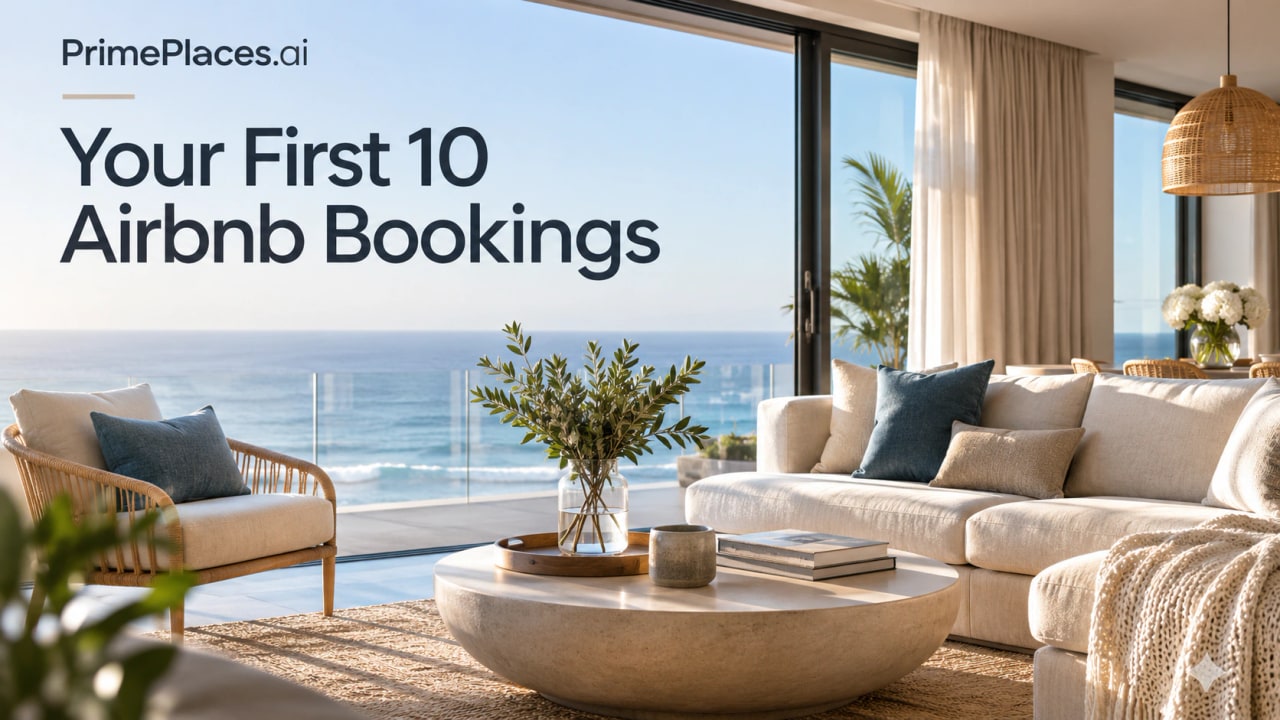
1. Your Hero Photograph Is Your Most Important Marketing Asset
Before prospective guests read your description or examine your amenities, they encounter your property's primary photograph competing for attention alongside dozens of other listings.
That image needs to make an immediate impression. Whether your property's strongest feature is an ocean view, beautifully furnished interior or swimming pool, your hero photograph should communicate what makes it worth considering.
Professional photography is a worthwhile investment. Lighting, composition and presentation can dramatically influence how attractive a property appears, particularly on mobile devices where photographs are displayed as small thumbnails. If your first image doesn't attract attention, guests may never discover what makes your property special.
2. Prioritise Your First 5–10 Bookings Over Maximum Revenue
One of the most common mistakes new hosts make is pricing their property against established competitors without accounting for the value of their existing reputation. A property with fifty positive reviews offers reassurance that a new listing simply cannot provide.
Competitive introductory pricing helps overcome that disadvantage. During the launch period, prioritise securing the first five to ten reservations rather than achieving the highest possible nightly rate. Pricing meaningfully below comparable properties gives guests an incentive to consider an unfamiliar listing—but it still needs to cover your costs.
Think of the temporary reduction in revenue as an investment in your property's reputation. Every completed reservation creates an opportunity to generate genuine reviews, improve the guest experience and build credibility. Once established, you can gradually adjust pricing towards sustainable market rates.
3. Build Your Reviews and Don't Panic Over Four Stars
Guest reviews are fundamental to establishing trust. A property with no reviews asks prospective guests to rely entirely on the host's photographs and description, while a property with ten genuine reviews provides independent accounts of what visitors experienced.
Early guests sometimes identify shortcomings that weren't immediately obvious when preparing the property. Without previous reviews to inform their expectations, they may also encounter aspects of the property they hadn't anticipated.
A four-star review can be disappointing, particularly when it significantly affects your initial average rating, but it isn't necessarily a disaster. Feedback about parking, noise or an unexpected layout may reveal information that should have been communicated more clearly.
As reviews accumulate and descriptions improve, prospective guests develop more realistic expectations. The objective should always be five-star hospitality, while recognising that constructive criticism can help strengthen your listing. Encourage honest reviews after checkout without incentives or pressure. Never offer a discount or benefit in exchange for a positive review.
4. Make Your Remaining Photographs and Description Sell the Property
Once your hero photograph attracts attention and your reviews establish confidence, the remaining content must convert that interest into a reservation.
Show bedrooms, bathrooms, living areas and amenities clearly, avoiding unnecessary repetition. Your description should highlight the property's strengths while being transparent about limitations. Accurate expectations are essential to guest satisfaction and positive reviews.
Good Airbnb listing optimisation is not about adding more words. It is about answering the questions a guest needs resolved before booking: what the space is like, who it suits, where it is and what is included.
5. Use Airbnb's New Listing Promotions
Airbnb offers eligible new listings an introductory promotion. Its current new listing promotion offers a 20% discount until the listing receives three guest reviews or ten bookings, whichever comes first.
Airbnb states that eligible listings must have fewer than three reviews and Smart Pricing turned off. The promotion does not stack with other discounts, and reservations already booked with the discount remain discounted even if the listing reaches three reviews before those stays begin. Check the current terms and your listing's eligibility before opting in.
This can help overcome guests' hesitation about booking an unreviewed property. Consider incorporating the promotion into your Airbnb introductory pricing strategy, while ensuring your rates remain commercially sensible.
6. Open Your Calendar and Remove Unnecessary Restrictions
Restrictive minimum stays and limited availability can unnecessarily reduce booking opportunities.
During the launch period, consider allowing shorter stays and maintaining a more flexible calendar where operationally practical. Greater availability increases the range of guest searches your property can accommodate.
Flexibility should not come at the expense of accuracy. Only open dates you can actually honour, and account for cleaning time and existing reservations. Our guide to property availability calendars explains why keeping dates current matters when using more than one booking channel.
7. Make Booking as Easy as Possible
Guests often compare several properties before making a reservation, and unnecessary delays can result in lost bookings.
Respond promptly to enquiries, maintain accurate availability and consider Instant Book if it suits your operation. Removing friction from the reservation process is particularly valuable when establishing your first bookings.
8. Deliver Outstanding Hospitality From Day One
Your first guests will help establish your property's reputation, making operational readiness essential.
Before opening, thoroughly check cleanliness, Wi-Fi, hot water, bedding, appliances and check-in arrangements. Small oversights can have an outsized effect when a property has only a handful of reviews, so resolving problems before guests arrive is especially important.
Write clear arrival instructions and test them as though you were visiting for the first time. Our guide to guest check-in information covers the details that make arrivals easier.
9. Promote Your Listing Beyond Airbnb Search
Don't rely exclusively on Airbnb's marketplace for your initial exposure.
Share your listing through relevant social media channels, personal networks and local communities. Partnerships with nearby businesses may also generate enquiries, while establishing your own website creates an independent marketing channel for future growth.
Once you have the launch essentials in place, read How to Get More Bookings Beyond Airbnb for the next stage: developing an independent audience and a business guests can find beyond a marketplace search.
These channels should complement your listing, not divert Airbnb reservations off-platform. Keep Airbnb enquiries and reservations within Airbnb's rules, and use your own website to serve customers acquired independently. You can explore the PrimePlaces.ai product tour to see how a property website and direct-booking system work together.
10. Monitor Performance and Adjust Quickly
Once your listing is live, monitor guest interest and booking performance.
If you're receiving views but few reservations, investigate your pricing, photographs and booking restrictions. If visibility is poor, compare your property's availability and competitiveness with similar listings. Small adjustments during the launch period can make a meaningful difference.
Change one or two things at a time so you can judge what helps. Booking patterns depend on your destination, season and property; no launch checklist can guarantee a particular number of reservations.
Your First Ten Reviews Are an Investment in Your Property's Future
Launching a new Airbnb listing should be approached as a distinct phase in the property's commercial life. The immediate objective is to attract attention through exceptional photography, convert that interest into reservations through competitive pricing and establish credibility through genuine guest reviews.
These factors work together. Without a compelling hero photograph, guests may never examine your property. Without competitive pricing, they may choose an established alternative. And without completed reservations and reviews, establishing the reputation needed to support stronger pricing becomes considerably more difficult.
As credibility develops, the emphasis can gradually shift from securing initial bookings towards optimising occupancy, nightly rates and profitability. Our guide to building guest relationships and repeat bookings explores how to keep that momentum going.
Your first few bookings are worth considerably more than the revenue they generate. They establish the reputation that will influence your property's performance for years to come.