Every Airbnb reservation represents more than a few nights of revenue. It introduces a potential repeat customer to your business. Yet many hosts invest heavily in attracting guests, only to lose that relationship when the reservation ends.
Airbnb is an excellent platform for reaching new travelers, but it shouldn't be the only way people discover your property. Building a recognizable brand, making your business easy to find and developing an independent customer base are essential steps toward generating more repeat bookings.
If you are wondering how to get repeat Airbnb guests, start with the experience and the business they remember—not a request to move an Airbnb reservation elsewhere. Airbnb repeat bookings and independently generated direct bookings are different channels, and your approach should respect that distinction.
The opportunity is to turn a memorable stay into a lasting relationship. Here are five practical strategies that can help.
1. Build Your Own Guest Contact Database
One of the most valuable assets a hospitality business can develop is a database of customers who have chosen to stay connected.
Without that relationship, every new booking potentially starts from scratch. You may have welcomed hundreds of satisfied guests, yet have no independent means of keeping your business in their minds.
Names, email addresses and phone numbers are particularly valuable when customers provide them voluntarily through your own website, direct bookings, newsletter subscriptions or loyalty program.
Make it easy for visitors to subscribe to updates, save their preferences or join a returning-guest program. Keep registration simple and explain what customers will receive in exchange for their details.
There is an important distinction between building your own customer database and using information obtained through Airbnb. Airbnb restricts collecting guest contact information during its booking process and stays, and prohibits using information it supplies for unauthorized marketing. Your independent contact database must be developed through permitted channels, with appropriate consent.
The objective is not simply to collect email addresses. It is to establish a direct customer relationship that continues beyond an individual reservation.
2. Make Your Business Easy to Remember With QR Codes
Guests frequently remember where they stayed but struggle to remember the property's name or find it again months later.
A simple QR code can help solve that problem.
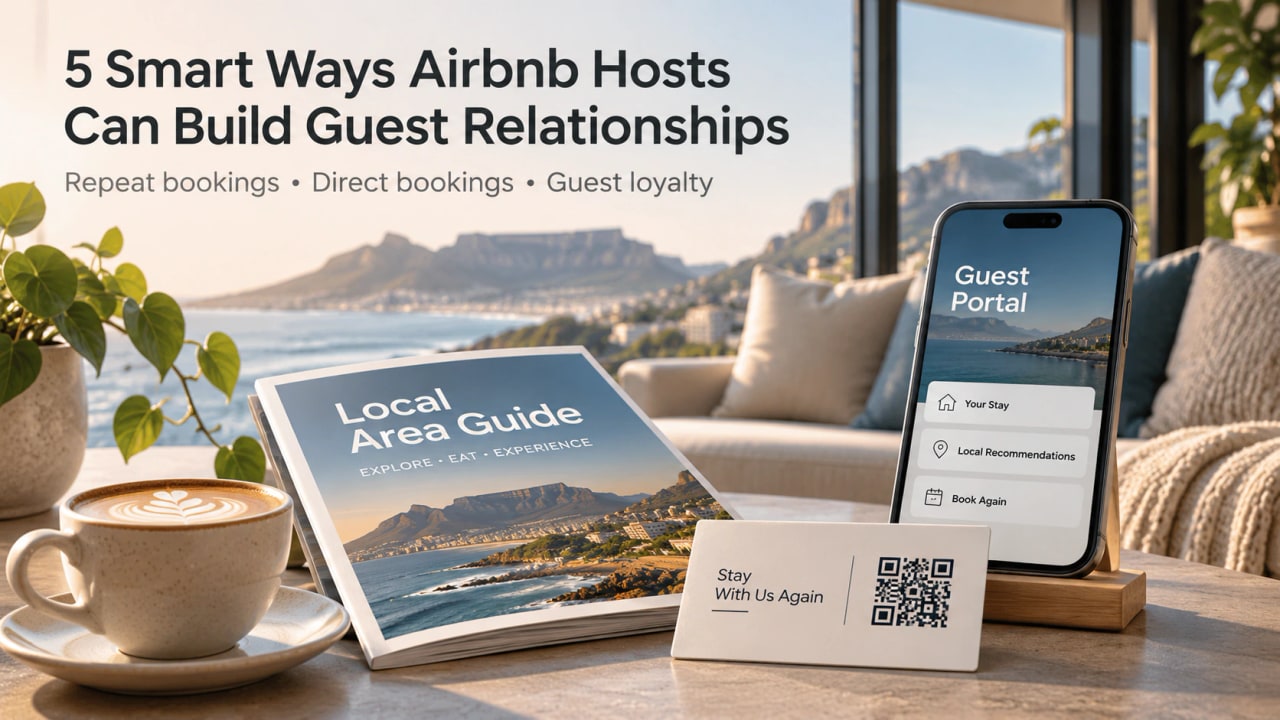
Create a professionally designed card displaying your property's name, website and contact details. Include a QR code that opens your digital business card, allowing guests to save your business information directly to their phone.
You can also use QR codes to provide instant access to your property guide, local recommendations, Wi-Fi instructions and other useful information.
The key is convenience. A guest shouldn't need to search through old reservation confirmations to remember the name of a place they enjoyed.
For your independently marketed properties, QR codes can also connect prospective customers to your branded direct-booking website. Include them in brochures, marketing materials, social media campaigns and other appropriate promotional channels.
A physical business card might be discarded. A saved digital contact, complete with your website and recognizable brand, is far easier to find when the next trip comes around.
3. Create a Premium Local Area Guide That Guests Will Keep
A well-designed destination guide can be one of the most effective and overlooked marketing assets for a vacation rental business.
Rather than providing a basic list of nearby restaurants, create something genuinely useful: a beautifully presented, downloadable guide to the area surrounding your property.
For a Cape Town apartment, this might include the best local breakfast spots, lesser-known beaches, scenic drives, family activities, recommended restaurants, practical transport advice and a carefully considered three-day itinerary.
The strongest guides offer the sort of recommendations visitors might struggle to find in generic travel articles. They reflect your local knowledge and help guests experience the destination rather than simply occupy your property.
Make the guide unmistakably yours.
Include your business name, branding, website and contact details in the design. Use a consistent visual identity, incorporate QR codes where useful and ensure the information is attractive enough that guests will save the guide on their phones.
A polished PDF is particularly effective because it can be downloaded, shared with travel companions and kept long after the holiday ends.
Publish your guides on your own website as well. This creates an additional opportunity to attract organic search traffic from people researching the destination, including travelers who have never encountered your Airbnb listing.
For independent visitors, offer a free download and an optional subscription to future destination guides or travel recommendations.
A guide that delivers genuine value is more likely to be remembered and shared. It also gives your hospitality brand a presence beyond the original booking.
4. Give Guests Access to a Branded Digital Guest Portal
Hotels have long understood the value of maintaining their own relationship with customers. Independent vacation rental operators can adopt a similar approach through a digital guest experience.
A well-designed guest portal can become the central source of information for a stay.
Guests might use it to explore curated local recommendations, find restaurant suggestions, review property information, arrange optional services or discover additional properties managed by your business.
Unlike a static welcome booklet, a digital portal can be updated continuously, providing guests with current information throughout their visit.
For customers booking through your independent website, a guest account can offer additional benefits: saved contact details, booking history, personalized recommendations and an easier experience when making another reservation. Available features depend on the system you choose.
The portal should provide a useful service rather than create unnecessary administration. For Airbnb guests, access should remain optional, and essential stay information should never depend on registering with a separate platform. Our guide to clear guest check-in information explores how to keep arrival details easy to use.
A thoughtfully designed portal reinforces your brand while improving the guest experience. Most importantly, it encourages customers to recognize the hospitality business behind the property, not just the marketplace where they discovered it.
5. Give Guests a Reason to Return and a Simple Way to Book
Building brand recognition and customer relationships is only half the equation. Your business also needs an independent booking channel capable of converting interest into reservations.
A professional website should allow visitors to explore your properties, check availability, understand pricing and complete a secure booking without unnecessary friction. See how a direct booking engine works for the steps behind that experience.
Once that infrastructure is in place, you can develop a meaningful loyalty strategy for customers acquired through your own channels.
Returning guests might receive preferential pricing, early access to popular dates or additional benefits such as flexible check-in arrangements where available. The incentives don't necessarily have to be expensive. Recognition, convenience and consistent service can be just as persuasive.
Permission-based email marketing and WhatsApp communications can help maintain these relationships. A seasonal update, an invitation to return or a recommendation for another destination may be all that is needed to remind a satisfied customer about your business.
The important thing is to avoid overwhelming customers with generic promotions. Good hospitality marketing should feel like a continuation of the relationship, not an endless sales campaign. That is the basis of effective Airbnb guest communication and guest retention, rather than simply sending more messages.
This is also where platforms such as PrimePlaces.ai become valuable. By combining a professional property website with an integrated direct-booking system, hosts can establish an independent sales channel rather than relying entirely on third-party marketplaces. Explore the product tour to see the website and management tools, or compare the plans for your property business.
Airbnb's policies prohibit encouraging guests to move current, future or repeat Airbnb reservations off-platform. Direct-booking promotions should therefore focus on your independently acquired audience rather than attempting to redirect Airbnb reservations. Review Airbnb's current pricing and payment transparency policy before introducing new guest communications or promotional materials.
The Real Opportunity Is Building a Business Guests Remember
Most successful hosts already understand the importance of excellent service, attractive properties and positive reviews. But those qualities alone don't guarantee that a guest will remember how to find them again.
The next step is to develop an independent identity for the business behind the listing.
A useful destination guide, a memorable brand, an easily saved digital business card and a thoughtfully designed guest experience can all help ensure customers remember more than just the apartment they stayed in.
Combine those efforts with a professional website, a permission-based customer database and an effective direct-booking system, and you begin building something considerably more valuable than a collection of individual reservations. For more vacation rental marketing ideas, read our guide to getting more bookings beyond Airbnb.
Airbnb can help customers discover your property. Your brand is what gives them a reason to remember it.