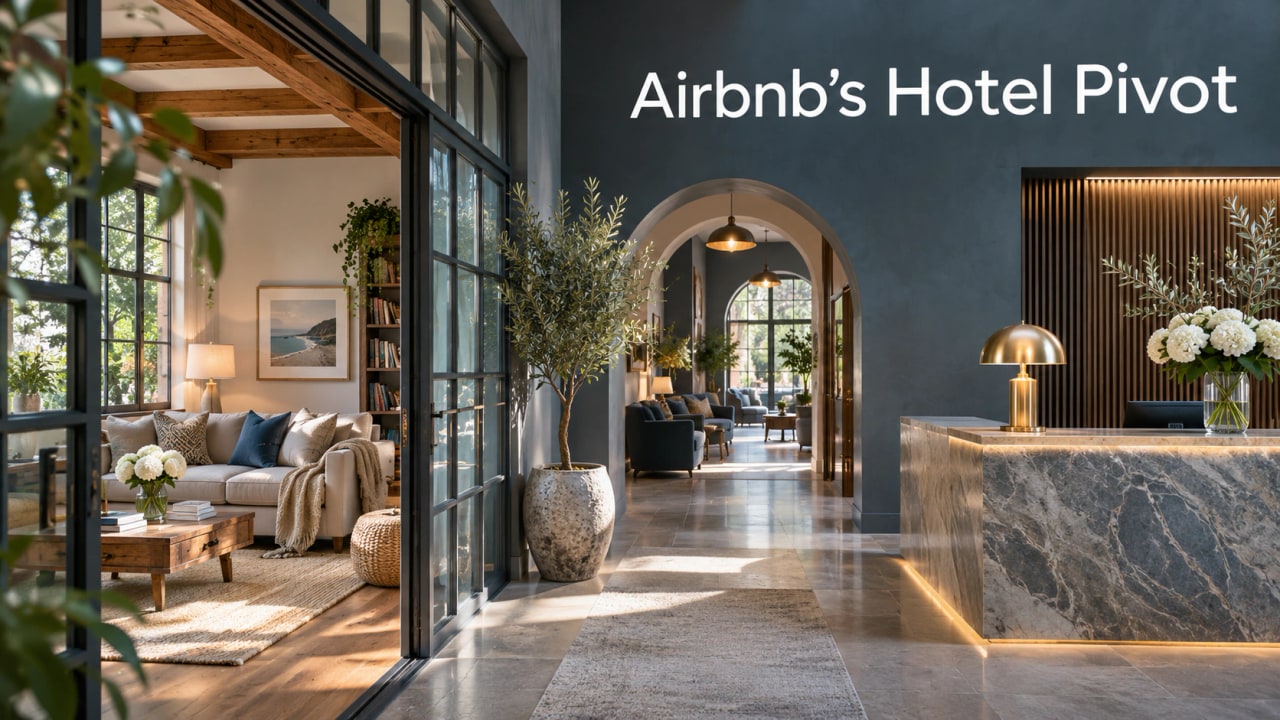
Airbnb built a global business by challenging the hotel industry. Now it wants a substantial share of that very same market. As hotels become a major strategic priority, two uncomfortable questions emerge: what happens to the hosts who built Airbnb, and can a brand associated with spare rooms, cleaning fees and unpredictable guest experiences establish itself as a credible hotel booking platform?
Airbnb once encouraged travelers to forget hotels. The promise was simple: stay somewhere different, experience destinations like a local and enjoy the freedom of a home rather than a conventional hotel room.
Nearly two decades later, the company that helped disrupt the hotel industry wants to become one of its major distributors.
During Airbnb's November 5, 2026 earnings call, CEO Brian Chesky described hotels as one of the company's biggest growth opportunities. Hotel bookings are growing considerably faster than its core business, and Chesky believes they could eventually generate multiple billions of dollars in annual revenue.
The irony is difficult to ignore. After years of promoting homes as an alternative to hotels, Airbnb is pursuing travelers who still prefer a reception desk, predictable service and someone else responsible for cleaning the room.
For the hosts who helped establish Airbnb, the question is whether the company is simply expanding its market or gradually moving beyond the people who made it successful.
From disrupting hotels to competing with Booking.com
Airbnb's interest in hotels is not entirely new. Its acquisition of HotelTonight in 2019 introduced the company to last-minute hotel reservations, but its ambitions have become considerably more aggressive.
Airbnb now offers thousands of boutique and independent hotels across more than 60 major destinations. Hotels still represent a single-digit percentage of total nights booked, but management sees substantial potential for expansion.
The company has also recruited Pepijn Rijvers, a former senior Booking.com executive, to lead its homes and hotels businesses and international expansion. Chesky has even acknowledged that major chains such as Hilton and Marriott could eventually appear on Airbnb, despite previously considering them an uncomfortable fit with the brand.
These are not the actions of a company merely experimenting with boutique hotels.
The commercial logic is compelling. Airbnb attracts enormous numbers of travelers looking for somewhere to stay, but many leave when they cannot find a suitable rental. Business travelers, guests booking at short notice and those seeking one-night stays may prefer conventional hotels. By offering both, Airbnb can capture reservations that might otherwise go to Booking.com or Expedia.
Its ambition is increasingly clear: rather than being an alternative to hotels, Airbnb wants to become a marketplace for almost every type of accommodation.
That is an extraordinary transformation for a business founded on the idea that travelers wanted something different.
Can Airbnb escape its vacation rental reputation?
Airbnb has built one of the world's most recognizable travel brands, but recognition does not automatically translate into credibility in the hotel market.
Its reputation spans extraordinary luxury villas, professionally managed apartments and spare bedrooms. That diversity remains part of its appeal, yet it has also produced familiar complaints about inconsistent standards, complicated house rules, cleaning charges and guests being expected to perform household chores.
For travelers accustomed to hotels, these associations matter.
A recognized hotel brand generally promises professional housekeeping, established service standards and someone available when things go wrong. Individual hotels may fall short, but the expectation is clear. Airbnb's guest experience, by contrast, has historically depended heavily on the individual property and its operator.
Consumer research reflects this distinction. Alchemer's 2026 Hospitality Benchmark Study, surveying more than 1,000 US travelers, identified brand trust as the leading reason respondents preferred hotels, while vacation rental guests placed greater value on space, privacy and affordability.
Yet Airbnb's reputation is not nearly as weak as its critics might suggest. The 2026 American Customer Satisfaction Index gave Airbnb an overall satisfaction score of 79, matching Hilton's company-level score and exceeding Marriott's 78. These are broad brand ratings rather than comparisons of equivalent stays, but they demonstrate considerable consumer confidence.
Airbnb's challenge is therefore not simply overcoming a poor reputation. It is establishing a different expectation.
A guest booking a boutique hotel through Airbnb should expect the same professional standards they would receive booking that property directly or through another travel platform. The Airbnb name must become associated not only with distinctive accommodation, but also with consistent, dependable hospitality.
And that raises an interesting problem. Airbnb may control the reservation experience, search presentation and customer support, but the hotel itself remains responsible for delivering the stay.
If something goes wrong, will the guest blame the hotel, Airbnb or both?
This is ultimately the brand dilemma. Airbnb wants the credibility of professional hotels without abandoning the individuality that made its original business distinctive. It must convince travelers that the same marketplace can reliably deliver two quite different hospitality experiences.
What happens to the hosts who built Airbnb?
For traditional Airbnb hosts, the concern is not necessarily that hotels are entering the marketplace. It is what happens when those hotels begin competing for the same guests.
Independent property owners have invested heavily in acquiring, furnishing and maintaining accommodation. They carry the risks of ownership, rising operating costs, changing regulations and vacant nights. Airbnb, meanwhile, controls the marketplace through which many of those businesses attract their customers.
As hotel inventory expands, hosts may find themselves competing against professionally managed properties with established service operations, sophisticated pricing systems and substantial marketing resources.
The implications become more significant if hotels receive greater prominence in search results or become a priority for Airbnb's marketing and product development. There is no clear evidence that Airbnb is deliberately disadvantaging home hosts, but the commercial possibility deserves scrutiny.
Airbnb is a publicly traded company with shareholders expecting growth. Its strategic priorities will inevitably reflect where management believes the greatest opportunities exist. For years, those opportunities centred on independent hosts. Increasingly, they include the established hospitality businesses that Airbnb once positioned itself against.
There is, however, a credible argument that hotels could benefit traditional hosts.
Airbnb says approximately 35% of guests whose first Airbnb booking is a hotel subsequently book a home within a year. This suggests hotel inventory could introduce new customers to the wider platform rather than simply divert demand away from vacation rentals.
Hotels and private rentals also serve different purposes. Someone booking a hotel for a short business trip might still prefer an apartment for a family holiday.
But growing Airbnb's overall customer base and protecting the commercial interests of individual hosts are not necessarily the same thing.
As hotels become a more important revenue source, hosts are entitled to wonder how much influence their interests will carry in Airbnb's future decisions.
Airbnb's future may look very different from its past
The distinction between hotels, serviced apartments and vacation rentals has already been narrowing. Professional short-term rental operators increasingly deliver hotel-quality experiences, while hotels have expanded into apartment-style accommodation, extended stays and self-catering facilities.
For travelers, the label matters less than the quality, convenience and value of the stay.
Airbnb's hotel expansion reflects this changing market, but it also challenges the assumption that staying in a home is inherently preferable to staying in a hotel. It isn't. Both have their advantages, and travelers increasingly expect professional standards regardless of where they book.
Independent hosts should pay attention. Their competitive advantage cannot depend indefinitely on simply having a listing on Airbnb. Distinctive properties, consistently high standards, recognizable brands and independent guest relationships will become increasingly valuable as the marketplace evolves.
Airbnb has every commercial reason to pursue hotels. It possesses substantial international traffic, a powerful consumer brand and an established reservation infrastructure. The opportunity to capture billions in additional hotel bookings is understandably attractive.
But the company faces a delicate balancing act. If it becomes another comprehensive travel marketplace, what happens to the distinctiveness that made it successful? And as it increasingly competes with Booking.com and Expedia, will independent hosts remain central to its strategy or become just another category of accommodation?
There is little evidence that Airbnb intends to abandon its traditional hosts. Indeed, its own figures suggest hotels could bring more customers into the home-rental business. Nevertheless, its ambitions now extend far beyond the community of property owners on which it was founded.
Airbnb once built its business by convincing travelers they didn't need hotels. Its next chapter may depend on convincing them to book hotels through Airbnb.
The real question is whether the hosts who built that business will benefit from its next transformation, or find themselves competing for attention on a platform that has outgrown them.
For more on developing an independent channel alongside the major platforms, read why hosts need their own booking website and practical ways to build guest relationships and repeat bookings.